Best AI Ranking Agency in Seattle: How to Choose and What to Look For in 2026
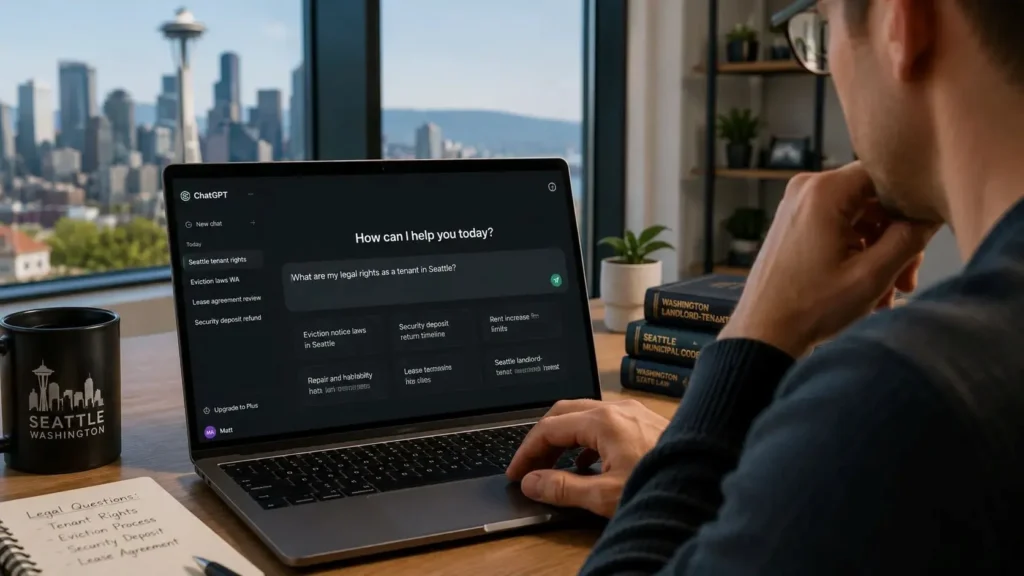
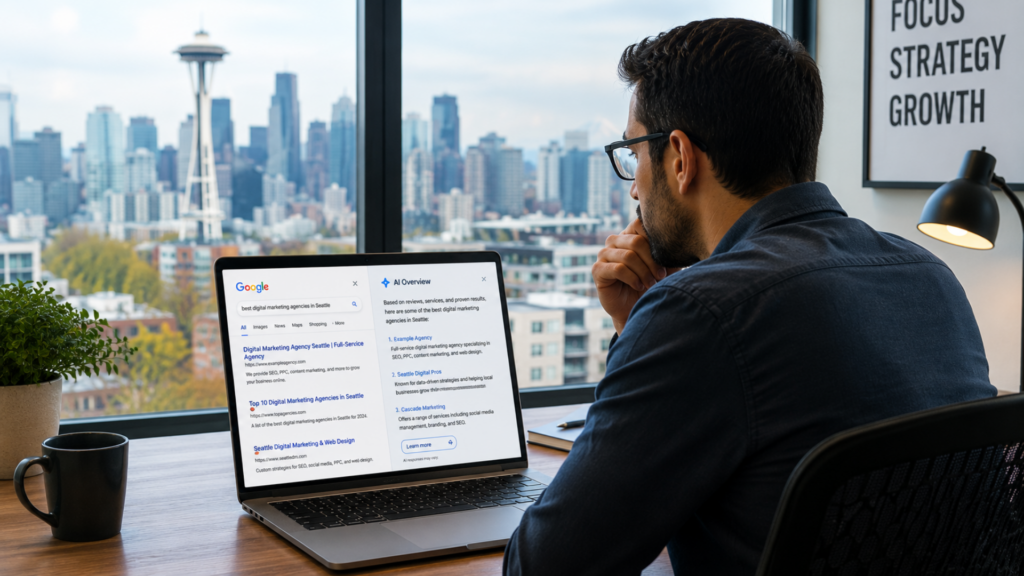
Something strange is happening to a lot of Seattle businesses right now. Their rankings look fine. Google Search Console shows stable impressions. But leads are down. Calls are down. And nobody can figure out why. The way people find businesses has fundamentally changed. AI tools like ChatGPT, Perplexity, and Google AI Overviews are now answering questions directly, without sending the user to your website. If you’re not the source AI pulls from, you’re invisible to a growing slice of your market. Choosing the right AI ranking agency in Seattle is a survival decision now. This guide will help you make it. What “AI Ranking” Means (And Why It’s Different From SEO) Traditional SEO was about getting your website to the top of Google’s blue-link results. That still matters. But it’s no longer the whole game. The Zero-Click Reality Is Here Right now, roughly 60% of searches end without anyone clicking a link. People ask a question. Google’s AI Overview answers it. The user gets what they need and moves on, without visiting any website, including yours. The same thing happens on ChatGPT, Perplexity, and Gemini. Users ask, “Who’s the best marketing agency in Seattle?” “What should I look for in a GEO agency?” And the AI gives an answer. That answer comes from sources the AI trusts, websites it’s crawled, content it can extract clearly, and brands with strong entity signals across the web. If your business isn’t one of those trusted sources, you don’t exist in that answer. And that answer is where your buyer just made a decision. What AI Ranking Involves AI ranking, sometimes called Generative Engine Optimization (GEO) or AEO, is about making sure AI systems understand your business, trust it, and pull from it when answering relevant questions. That means a few things working together: This is what separates a legitimate AI ranking agency from a traditional SEO agency that rebranded its website and added “AI” to its service list. And honestly, most of what you’ll find in Seattle falls into that second category. What to Look For in an AI Ranking Agency in Seattle If you’re evaluating agencies, here’s what actually separates the real ones from the rebrand. They Measure AI Citation Share, Not Just Keyword Rankings Any serious AI ranking agency tracks whether AI platforms are actually recommending your business. That means running automated prompt tests across ChatGPT, Perplexity, Gemini, and Google AI Overviews, and tracking your “Share of Model” over time. If an agency shows up to your review meeting with a keyword ranking report and calls it AI visibility, walk away. Those are different things. Ranking on page one for a keyword doesn’t mean you’re being cited when someone asks ChatGPT, “Who’s the best [your service] in Seattle?” Ask directly: How do you track whether ChatGPT and Perplexity are recommending our business? If the answer doesn’t involve prompt testing across multiple AI platforms, keep looking. They Have a Real GEO Methodology, Not AI Buzzwords It’s extremely easy for an agency to say “AI-powered SEO” and mean absolutely nothing by it. The phrase has been emptied out by overuse. What you want to hear instead is specifics. Ask them to walk you through their GEO process. What schema types do they implement? How do they structure content for machine extractability? How do they build entity signals beyond your website? What does the first 90 days actually look like? A real agency can answer all of that without hesitation. An agency cosplaying as an AI shop will give you a lot of language about, “holistic digital presence” and “next-generation visibility frameworks” and nothing concrete. They Understand Seattle’s Market Specifically Seattle is a dense, tech-savvy market. You’re competing with SaaS companies, cloud infrastructure firms, biotech brands, and enterprise services, all fighting for attention from a buyer who’s more digitally sophisticated than average. What works for a home services company in Tulsa isn’t what works here. A good Seattle AI ranking agency knows the local competitive landscape. They understand which industries are most saturated in local AI results. They’ve worked with Seattle-area businesses and can point to specific outcomes in this market. At (The Good Marketing Team), we only take 30 client partnerships at a time, exactly because this kind of market-specific attention is impossible to deliver at scale. They’re Honest About Timelines Meaningful AI citation results take 60 to 120 days minimum. Full authority-building is a 6 to 12-month process. Any agency promising you’ll be in ChatGPT’s recommendations within 30 days is either lying or showing you cherry-picked screenshots. Real agencies set realistic expectations. They explain what the first quarter looks like (technical audit, content restructuring, schema implementation, entity signal building) and what the 6-month picture looks like (measurable citation frequency, competitive gap analysis, compounding authority signals). That’s the honest version of this timeline. They Combine SEO Foundations With GEO Amplification Here’s a mistake a lot of business owners make: they hear about GEO and think they can skip traditional SEO. You can’t. AI systems need your site to be technically sound before they’ll trust it. Slow load times, poor site structure, missing metadata, crawl errors, these things don’t just hurt your Google rankings. They signal to AI models that your site isn’t a reliable source. You have to fix the foundation before you build the authority on top. The best agencies don’t position SEO and GEO as competing services. They treat them as one system. The Good Marketing Team’s approach starts with SEO clarity, then layers GEO to make that clarity visible to AI systems, because one without the other doesn’t hold. They Limit Their Client Load This one sounds counterintuitive, but it’s a real signal. Agencies that take on 200 clients can’t give any of them the sustained attention that AI authority-building requires. GEO isn’t a set-it-and-forget-it campaign. It requires ongoing content building, entity reinforcement, prompt testing, and competitive analysis. When an agency caps client partnerships and can tell you why, that’s a sign they understand what the work actually takes.